[VERSÃO EM PORTUGUÊS MAIS ABAIXO!]
n.v.
Sweet Trip remained a pretty underground band for almost a decade, despite their mix of shoegaze, dream pop, IDM and glitch being rather unique. Fortunately, the band was (re)discovered before any tragic events and such buzz even inspired members Roby and Valerie to return their activities. A Tiny House, In Secret Speeches, Polar Equals was released last May and it’s their first album in 12 years – get the physical versions here. I spoke with Roby about their new great record and more below.
First of all, how are you doing?
I’m trying to be ok. Hope you are well.
How does it feel to finally have a new album out?
It’s a mixed bag of emotions. It’s exciting to finally let a project loose and to see things unfold, and that also comes with a healthy amount of anxiety. This is new territory for us. Previous records were released without much talk. This time around there are expectations that we are fully aware of, and while they did not interfere with the writing of the record, once the record is out we acknowledge that those expectations are going to play a significant role in how people perceive it. That’s nerve-wracking, to be honest. At the end of the day, we both are super proud of A Tiny House. We set out to make a record for ourselves first and foremost, a collection of songs that come from the heart and speak to our souls.
On that aspect, one could argue that Sweet Trip was not only re-discovered with time, but reappraised too. How do you feel about that? Did you guys see the buzz growing through the years or it was more of a sudden thing?
It is incredible that after all these years, people from around the world have started to pay attention to what we do. It is really amazing and humbling. I think we started to notice the buzz about a year or so before we started working together again, maybe a little earlier than that. We started getting messages from people through the weirdest places, like LinkedIn for example, and on a few occasions, people would ask us if we have seen the comments and rating on Rate Your Music. It feels sudden to us, even if “sudden” is actually a period of 3 to 4 years.
I was discussing with a friend that your earlier records are “super Bandcamp stuff”, meaning that aesthetic (experimenting with genres, gentle with glitchy, homemade yet expansive) is now common there. But we could also say that “mainstream” is more open to left-field stuff now, with PC Music and 100 gecs being examples. Do you feel that had something to do with Sweet Trip’s growing reputation?
Yes, I think so. I think that between VDC and now, people have embraced technology exponentially, and that has allowed people to not only be exposed to new ways of making music, but also to be more open minded. I think that has allowed people to appreciate our music a lot more than 20 years ago. It is similar in a way to how your palette becomes more sophisticated after you leave your childhood home as an adult, and explore new and exciting culinary experiences.
Still on technology, it’s evident that “bedroom” production democratized dream pop and shoegaze, which were obviously gear based and expensive initially. On one hand, though, it seems those genres kind of lost creative ambitions a bit – to the point sometimes things are taken for granted, like reverb is automatically and always ethereal and if it’s noisy, it’s shoegaze. That’s not the case of Sweet Trip, as the new record shows. What’s your opinion about it?
That’s an interesting question, and my views on the subject may be a bit controversial, I don’t know – I hope not. I understand that desire to seek the “shoegaze aesthetics” because when we started in the mid 90s, we were seeking the sound too. We idolized our favorite bands to the point where we wanted to emulate them as much as we could, and our early recordings are basically imitating and even down right copying what bands like the Pale Saints, MBV, Moose, etc, were doing. I think that at some point we realized that shoegaze was about thinking outside the box, about representing sounds and emotions in unconventional ways. We realized quickly that shoegaze opened up a lot of musical and sonic possibilities beyond the wash of reverb and overdriven guitars, that it didn’t have to fit the guitar-bass-drums mold, and that there was potential to go beyond that mold. I think our love for electronic music also helped us in this regard. We’ve always seen underground electronic music as being very diverse and inclusive, and while many artists do seem to stick to one or a few particular sounds or styles, a lot of them also mix things that break out of those styles.
I think that, without overanalyzing things, our approach to music is similar to what 80s and 90s hip hop was about, a collage of sounds, styles, and techniques, with disregard to what is considered acceptable or not. There was an element of mischief in 90s hip hop production, a sort of “let’s see what I can get away with” mentality that is still very important to us.
I think that shoegaze today is still very much in that traditional 90s mold, and while there are some great bands out there, I am still surprised that not that many people (as far as I know) have taken that sound beyond sounding like MBV or Cocteau Twins, especially with all the production tools so freely available to musicians to help them spark creativity and to think outside the box. At the same time, I understand nostalgia and the desire for many artists to make music that is very pure and dear to their hearts. I just wish more people would ask themselves, “what if?” more often, because that question is a basis for adventure, not just in music but in every part of life. For example, “what if I spent a month in another country?”, “what if I make a pizza sauce with red bell peppers and tomatoes, instead of just plain tomatoes?”, “what if instead of heavily reverberated guitar, we use a chaotic sounding synth?”…
What was your gear / softwares for the album? How was the creative process between you and Valerie – any notable differences (outside of the pandemic scenario, of course)?
The new album was recorded using Ableton Live, with Wavelab audio editor for additional support and tweaks. Wavelab is something we have used since VDC not just for editing audio, but also as a creative tool to tweak and often transform or destroy audio. We used an array of plugin effects and instruments, some of them quite old from the very beginnings of VST plugins. I think that aside from the obvious guitars, electric bass, and some other percussive instruments and found sounds, the only hardware gear used on this record were a Boss phaser pedal, a Boss analog flanger, and a Korg Monologue for some specific sounds that could be achieved using plugins, but just sound better coming from a real analog synth.
For this record, the only notable difference in our creative process was the strong bond between Valerie and I, a bond that just became more, more solid and endearing in the last 2 years. It is still a surreal experience for us. We’ve always been well connected emotionally and musically in the past, and when we got back together after 12 years, it felt like picking up where we left off. Along with that there was a new emotional layer between us that really drove us to make this record happen. I’ve always felt that our records are, in a way, self indulgent (which is probably a shoegaze trademark), because we make music for ourselves first and foremost.
Valerie is always the first, second, third, fourth, and fifth person I aim to impress with the music we create, and if she is not impressed, then a song is shelved. With this new record, I think that self indulgence comes through even more because this record is not just about music we want to listen to and be happy with, but it is a record for us, full of passion. Aside from that, the creative process was about the same as in the past, in that there really isn’t a concrete creative process to speak of. A song can come from a feeling, a song title, a line for a lyric, a simple guitar chord progression, a beat, a sound, a moment, or an exercise.
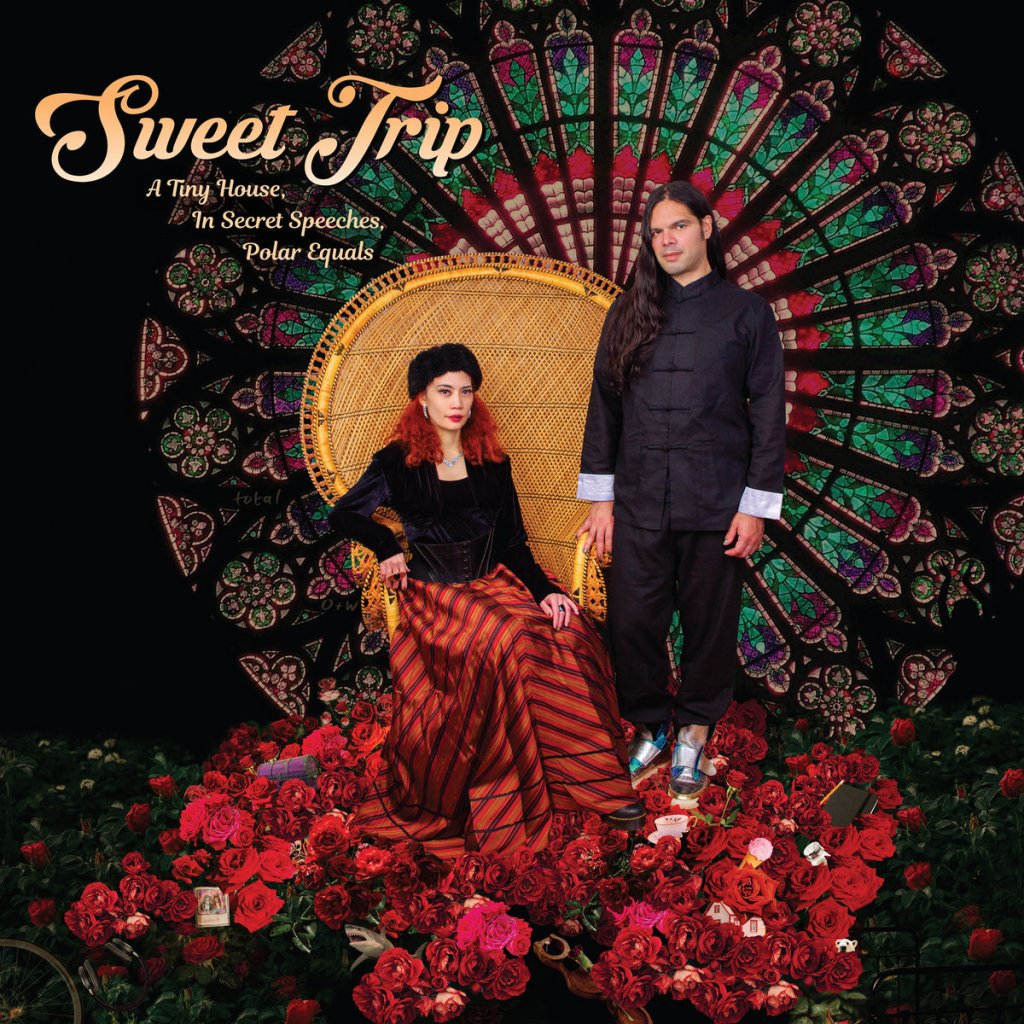
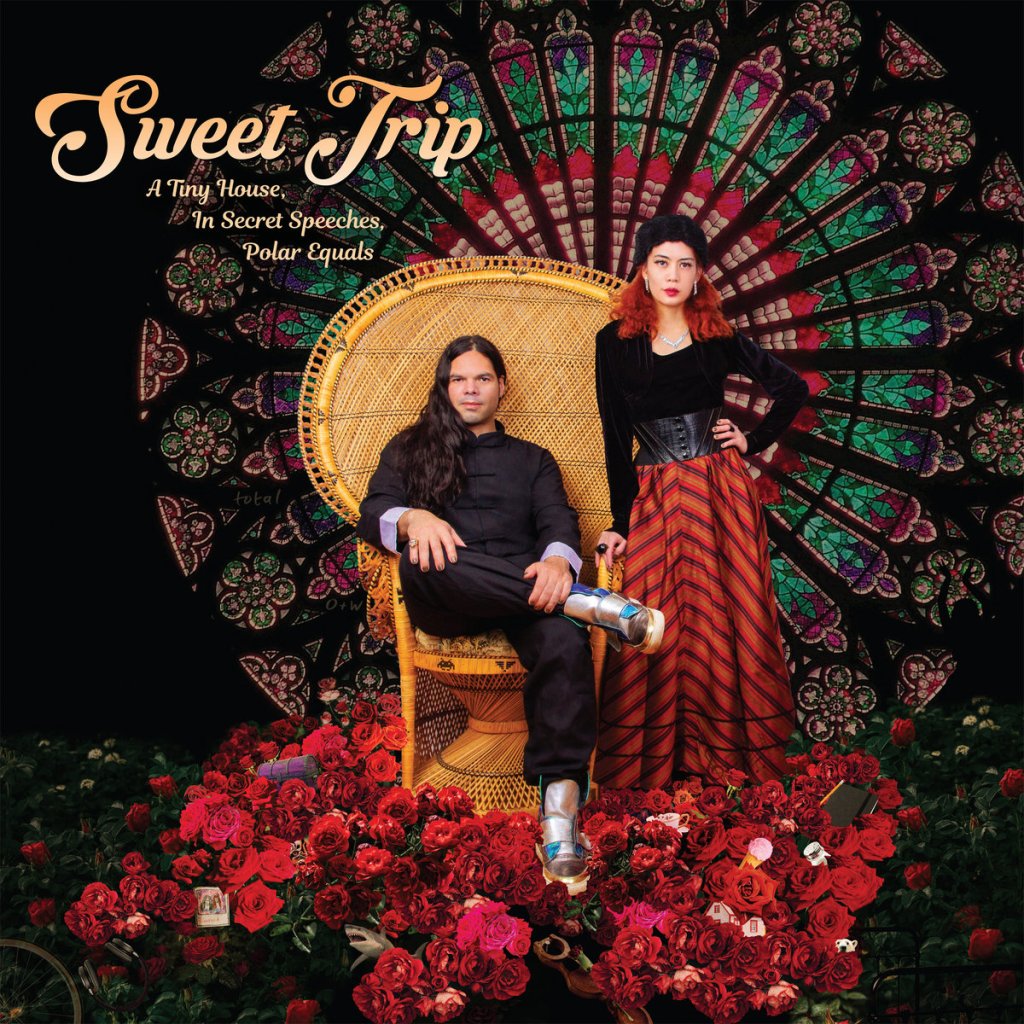
This is the first LP with your faces presente somewhere, and it’s right on the cover! Why? What was the inspiration behind it?
In the past, we have always been a bit uninvolved in the artwork for our records. In several situations we couldn’t make up our minds about what to do, or we had to accept artwork that was not 100% there for our taste. This time around we decided that we wanted to have total control of any art that would represent us. At the same time, as we increased our social media presence, we organically started to cultivate this lo-fi, very DIY and homemade “brand”, I guess, for lack of a better word. That has given us more confidence in owning the space that we live in, and to feel about the decisions we make in that aspect.
When it came time to think about artwork for the new record, we went through a few ideas, but one that we kept going back to was to mimic the record covers of 60s and 70s that featured the peacock wicker chair. In fact, this idea came from a mini documentary on the wicker chair in music, that was created by Vox Media. We realized that in order to pull that idea off, we would have to part of the artwork itself, something that we definitely struggled with because, aside from our pictures on Instagram, we are not the type of people that seek professional, rock star portraits – we really dislike them. At the same time, we had a vision of creating an album cover that was rich, romantic, cheesy and kitschy, because the record is very rich in our opinion, and the entire thing is one big love letter, and the record is about us and for us first and foremost. Anyway, we get a kick at the possibility that if someone ever makes another documentary about the wicker chair in music, that A Tiny House may be mentioned in it, haha.
On the social media presence, I noted you even interact with “haters” online.
Overall, I like to interact with our fans whenever possible. It’s a very strange thing though because we are both very introverted and reserved. At the same time we are music fans just like the people that follow us and listen to our music. We know what it is like to wish you could send a message, an email, a letter, to your favorite band and hope to get a response from them. We know the value and the effect a response can have to us music fans. Valerie and I have talked about this multiple times. At the same time, we are just regular people, and we don’t mind getting into discussions with our fans whenever we can because we appreciate the love and support they have given us throughout the years. It’s the least we can do.
We also try to engage with naysayers as you said for a few reasons. One, I must admit, is to interact with them in a human way, as kindly as possible, to let them know that we appreciate their feedback as long as it is constructive, and hopefully win some points from them to give us another chance, haha. Secondly, I am not a fan of negative internet discourse at all, and I firmly believe that when it comes to voicing opinions, engaging in discussion or arguments, we can do a whole lot better. So when I see tweets or posts that are not just negative, but down right abrasive, violent, rude, and therefore completely uninformative, the urge to reply comes out quickly.
This is not something I do regularly, nor in the past because I never felt like I had a platform to voice my opinions on that matter, but within the context of our band, comments are a little bit more close to home to sort of make me want to address them. Obviously, the last thing I want is to get into a shouting match with anyone, so I try to keep my responses light, objective, without pointing fingers. Something that I wish more people had in their communication toolset is that a comment like, “So and so band fucking sucks and they should die,” is not only rude, violent, insulting, and uninformative, but they are also disrespectful to our own opinions. If we care about what we believe in, then we owe it to ourselves to represent what we believe in with the same respect that we want others to grant us. Like, if you made a cake you are really proud of, and you are going to serve it to people, you can bring the cake to the table, explain what the cake is, and show how much and dedication to put into baking it – or, you can just toss on the table and say, “here, enjoy, I don’t care.”
And well, people are pretty passionate about Sweet Trip – I mean, Velocity and You Will Never Know Why are albums of the year in RateYourMusic, both have more ratings than any Bob Marley or Madonna records too. I saw one person wishing the band was “famous like Tame Impala” there…
We are really grateful and humbled by the RYM community and by all the nice things they have said about our music there. In many ways, the love people have given us there had an effect on us getting back together. I don’t know about being famous like Tame Impala though, haha. We definitely do not have any goals like that, but people’s well-wishes are super sweet.
You don’t consider doing shows when the world allows it again?
We would love to once it’s safe.
What are some bands you’d like to play with? Are there any new ones you consider as kindred spirits? I’ve heard you stan LOONA!
We would love to play with some of our idols, Slowdive, MBV, etc. I think that would be fantastic and quite an experience for us.
We actually don’t listen to LOONA, nor k-pop in general. I think you are referring to that little remix snippet that was posted on Twitter. That was just made for laughs. I believe some people were saying that we were going to produce the next LOONA record, which I thought was funny, and that little remix was created to show what it could be like. It was just for fun.
I find it pretty amusing that the new LP continues the idea of using the album title as a statement of sorts: there was the “slogan” thing on Velocity : Design : Comfort, the mystery of You Will Never Know Why and now the combination of songs, which I assume are a nod to the bonds between you two. Was that a planned thing?
That’s a good observation, one that I never thought of. Yes, I think there is something we are telling people about the album titles. I think that for us, everything that envelops a set of songs into a record has a story to tell, or for people to come up with. For the new record we wanted a title that represented the songs in some way or another, and that was what felt right in the end. It does convey that deep connection we have.
For us, a title of a record or a song is just as important as the song itself, not just an identifier, or a simple summary of what the song is about if you will – or like the summary to a chorus, as it seems to be the norm. A title for us can either reinforce the emotions of a song, or make the meaning of a song more vague, which is something we like to do. Anyway, A Tiny House, In Secret Speeches, Polar Equals stands for emotional connections between people in a safe, humble environment.
//
O Sweet Trip permaneceu como nome cult por quase uma década, embora a mistura de dream pop, shoegaze, glitch e IDM do grupo tenha adiantado muita coisa dos anos 10. Felizmente, a redescoberta e avaliação vieram antes de algum acontecimento trágico, e a nova apreciação em fóruns online inclusive inspiraram Valerie e Roby a retomarem as atividades. A Tiny House, In Secret Speeches, Polar Equals foi lançado em maio e é o primeiro (ótimo) disco do Sweet Trip em doze anos. Conversei com Roby sobre tudo isso e mais.
Qual o sentimento de enfim ter um disco novo na praça?
É um misto de emoções. Empolgante finalmente lançar um projeto e ver como as coisas se desdobram, e com isso vem uma dose saudável de ansiedade. É algo novo pra nós, já que os álbuns anteriores foram lançados sem muito hype. Desta vez haviam expectativas das quais estávamos plenamente cientes e, mesmo que não tenham interferido na composição do disco, uma vez lançado sabemos que essas expectativas vão ditar muito sobre como as pessoas o compreendem. É estressante, pra ser honesto. Mas, ao fim do dia, nós dois estamos super orgulhosos do A Tiny House. Nosso objetivo era fazer um disco primeiro e principalmente para nós mesmos, uma coleção de canções que vinham do coração e falavam com nossas almas.
Nesse sentido, pode-se dizer que o Sweet Trip não só foi redescoberto com o tempo, mas reavaliado também. Vocês viram isso crescer com os anos ou foi algo mais repentino? Como se sentem sobre?
É incrível que, após todos esses anos, pessoas do mundo todo começaram a prestar atenção ao que fazemos. Acho que começamos a perceber o burburinho mais ou menos um ano antes de voltarmos a trabalhar juntos, talvez um pouco antes. Recebemos mensagens nos lugares mais inusitados, como no LinkedIn, e em algumas ocasiões perguntavam se vimos os comentários e as médias dos discos no RateYourMusic. Então parece súbito para nós, mesmo que “repentino” seja um período de 3 ou anos atrás.
Estava discutindo com um amigo que os discos anteriores eram “Bandcamp antes do Bandcamp”, no aspecto de que tal estética (experimentar com gêneros, amistoso mas fragmentado, caseiro mas expansivo) hoje é mais comum por lá. Mas também podemos argumentar que o mainstream também está mais aberto a experimentos no pop. Acredita que influenciou na reputação do Sweet Trip?
Sim. Creio que entre o Velocity : Design : Comfort e agora, o povo abraçou a tecnologia exponencialmente e isso não só permitiu a exposição de novos métodos de fazer música, como abriu mentes. É similar ao jeito em que sua paleta se torna mais sofisticada após sair de casa, se tornar adulto e explorar novas e empolgantes experiências culinárias.
Sobre tecnologia, é evidente que a produção caseira democratizou o dream pop e o shoegaze, que eram inicialmente caros e dependentes de muito equipamento. Na antemão, porém, parece que esses estilos perderam um pouco as ambições criativas de outrora – ao ponto de hoje ter quase virado convenção de que se é barulhento é automaticamente shoegaze, e se tem reverb já é etéreo. Qual sua opinião sobre?
É uma questão interessante, e minha visão pode ser um pouco polêmica, não sei – espero que não. Entendo o desejo de buscar “a estética shoegaze”, porque o fizemos quando começamos a banda nos anos 90. Idolatrávamos nossas bandas favoritas ao ponto de querer emulá-las o máximo que podíamos, e as primeiras gravações do Sweet Trip eram basicamente imitações (ao ponto de cópia) do que gente como Pale Saints, My Bloody Valentine, Moose, etc estavam fazendo. Penso que em certo ponto percebemos que shoegaze era sobre pensar fora da caixa, representar sons e emoções de maneiras não convencionais. E isso abriu muitas possibilidades sônicas e musicais para além das guitarras distorcidas e cheias de reverb, que não precisavam se encaixar no modelo “guitarra + baixo + bateria”. Acredito que nosso amor por música eletrônica também nos ajudou. Sempre enxergamos a música eletrônica underground como inclusiva e diversa, e enquanto vários artistas se prendem a alguns estilos em particular, vários outros os misturam.
Sem querer sobrepensar as coisas, creio que nossa abordagem musical é parecida com o a do hip hop das décadas de 80 e 90, uma colagem de sons, estilos e técnicas, sem compromisso com o que era considerado correto ou não. Havia certo elemento de travessura na produção noventista no hip hop, uma mentalidade do tipo “vamos ver se consigo me safar com isso” que ainda é muito importante para nós.
Vejo que hoje o shoegaze é bastante calcado na tradição dos anos 90, e embora existam ótimas bandas, me surpreende que não muitas (ao menos que eu saiba) levaram o som para além de soar como My Bloody Valentine ou Cocteau Twins, ainda mais com todas as ferramentas de produção disponíveis tão facilmente para ajudar músicos a estimular criatividade e pensar diferente. Ao mesmo tempo, entendo a nostalgia e a vontade de muitos em fazer música que é pura e querida aos seus corações. Só gostaria que mais pessoas se perguntassem “e se…?” com mais frequência, porque essa pergunta é a base para se aventurar não só na música, mas em cada parte da vida. Por exemplo: “e se eu passar um mês em outro país?”, “ e se fizer molho de pizza com pimentões vermelhos, ao invés de só usar tomates?”, “e se ao invés de guitarra reverberada, nós usarmos um sintetizador caótico?”…
Qual foi seu set de equipamentos e softwares para o A Tiny House? Alguma diferença notável no processo criativo entre você e a Valerie, tirando o cenário da pandemia?
O novo álbum foi gravado com o Ableton Live e o editor de áudio do Wavelab para ajustes e suporte adicional. Usamos o Wavelab desde o Velocity não apenas para edição, mas como ferramenta criativa para transformar ou destruir áudio. Experimentamos uma variedade de plugins de efeito e instrumentos, alguns da época bem inicial dos plugins VST (virtual studio technology). Creio que, fora as óbvias guitarras, baixo elétrico, alguns instrumentos percussivos e sons de objetos, o hardware usado no disco se resume a um pedal phaser e um flanger analógico da Boss e um Korg Monologue, para alguns sons específicos que podiam ser extraídos de plugins, mas soaram melhor saindo de um sintetizador analógico real.
A única diferença notável no nosso processo foi o forte laço entre a Valerie e eu, que só se fortaleceu nos últimos 2 anos. Ainda é uma experiência surreal para nós. Nós sempre tivemos uma grande conexão musical e emocional no passado, e quando nos reunimos após doze anos pareceu que estávamos continuando de onde paramos. Junto a isso houve uma nova camada emocional que nos guiou a fazer o álbum acontecer. Sempre sentimos que nossos trabalhos são, de um jeito, autoindulgentes (o que é provavelmente marca registrada do shoegaze) – já que fazemos música para nós mesmos em primeiro lugar.
A Valeria é sempre a primeira, segunda, terceira, quarta e quinta pessoa que busco impressionar com a música que criamos, e se ela não se impressiona, então a ideia é descartada. Com A Tiny House, acho que essa indulgência se sobressai ainda mais, porque não é apenas um disco sobre a música que queremos ouvir e ser felizes junto, mas um disco para nós, cheio de paixão. Fora isso, o processo criativo foi o mesmo de sempre, no ponto em que não há exatamente um processo concreto. Uma canção pode surgir de um sentimento, um título, um verso para letras, uma progressão de acordes simples na guitarra, uma batida, um som, um momento, um exercício.
Esse é o primeiro LP com os rostos de vocês presentes, e logo na capa! Por que? Qual foi a inspiração?
No passado, não nos envolvíamos muito com essa parte. Em várias ocasiões não conseguimos nos decidir ou tivemos de aceitar artes que não estavam sincronizadas 100% com nosso gosto. Dessa vez, decidimos que queríamos controle total de qualquer arte que fosse nos representar. Ao mesmo tempo, aumentamos nossa presença nas redes sociais e organicamente começamos a cultivar essa “marca” (por falta de uma palavra melhor) lo-fi, bem faça você mesmo e doméstica, e isso nos deu mais confiança.
Quando chegou a hora de pensar na capa, cogitamos algumas ideias e uma a qual retornávamos era imitar capas dos anos 60 e 70 que tinham a cadeira pavão. Na real, essa inspiração veio de um mini documentário sobre a cadeira pavão na música, feito pela Vox Media. Percebemos que, para a ideia se concretizar, nós precisaríamos ser parte da arte – algo que definitivamente foi um esforço pois, nossas fotos no Instagram não somos o tipo de gente que quer fotos profissionais estilo rockstar. Tivemos a visão de uma capa rica, romântica, brega, kitsch, porque em nossa opinião o disco é muito rico e é a coisa toda é uma grande carta de amor. Enfim, nos empolgamos pensando que se alguém fizer outro documentário sobre a cadeira pavão, talvez A Tiny House seja mencionado, haha.
Sobre a presença online, notei que você interage até mesmo com detratores.
No geral, gosto de interagir com os fãs sempre que possível. É um pouco estranho, pois nós dois somos muito introvertidos e reservados. Mas, ao mesmo tempo, somos fãs de música assim como aqueles que nos seguem e sabemos como é enviar uma mensagem para sua banda favorita e torcer por respostas. Sabemos o valor e o efeito que isso pode ter para nós. Somos apenas pessoas comuns, e não ligamos em entrar em debates quando podemos, pois valorizamos o apoio e amor que os fãs nos deram ao longo dos anos. É o mínimo que podemos fazer.
Também tentamos interagir com os críticos, como você disse, por algumas razões. Primeiro, devo admitir, é tentar interagir com eles de forma humana, o mais gentil possível, deixar saberem que apreciamos o feedback deles se for construtivo, e quem sabe ganhar alguns pontinhos e convencê-los a nos dar outra chance, haha. Segundo, não gosto do discurso de negatividade na Internet e acredito firmemente que podemos melhorar quanto a expressar opiniões, engajar em debates ou discussões. Então quando vejo tuítes ou postagens que não são apenas negativas, mas violentas (e logo, completamente desinformadas), a vontade de responder surge rápido.
Não é algo que faço com frequência, nem no passado fiz – porque nunca senti que tinha plataformas para me expressar. Mas dentro do contexto da nossa banda, os comentários são mais próximos e me fazem querer responder. Óbvio que a última coisa que desejo é começar uma gritaria com alguém, então procuro manter as respostas leves, objetivas, sem apontar dedos. Algo que gostaria que mais pessoas tivessem em sua mentalidade de comunicação é que um comentário tipo “essa banda é uma merda, deviam morrer” não é só rude, como também desrespeitoso com nossas próprias opiniões. Se acreditamos no que fazemos, então devemos a nós mesmos representar isso com o mesmo respeito que nos dão. Por exemplo, você fez um bolo do qual se orgulha e vai servir para as pessoas: você pode levá-lo à mesa, explicar e mostrar o tanto de dedicação que colocou nele ou apenas jogá-lo ali e dizer “tá aí, aproveitem, não me importo”.
E os fãs são bem apaixonados pelo Sweet Trip – tanto o Velocity como o You Will Never Know Why são álbuns do ano no RateYourMusic, ambos têm mais avaliações que qualquer disco do Bob Marley e Madonna também. Até vi alguém desejando que vocês fossem “famosos como o Tame Impala” por lá…
Somos muito agradecidos pela comunidade do RYM e por todas as coisas legais que disseram sobre nossa música lá. De várias maneiras, o amor dos usuários de lá teve efeito no nosso retorno. Não sei sobre ser do tamanho do Tame Impala, porém, haha. Definitivamente não temos objetivos como esse, mas o carinho das pessoas é super legal.
Não consideram fazer shows quando possível?
Adoraríamos, quando for seguro.
Com quais bandas vocês gostariam de tocar? Ouvi que você é fã das LOONA!
Adoraríamos tocar com nossos ídolos, Slowdive, MBV, etc. Acho que seria uma experiência fantástica para nós. Na verdade não ouvimos LOONA nem k-pop. Creio que você se refere ao remix que postei no Twitter, mas fiz aquilo só de brincadeira. Um pessoal estava dizendo que iríamos produzir o próximo disco da LOONA, o que achei engraçado, aí aquele trechinho foi só pra mostrar como poderia ser.
Acho curioso que o disco novo continua a ideia de usar o título como certa espécie de afirmação: teve o “slogan” de Velocity : Design : Comfort, o mistério de You Will Never Know Why e agora a combinação de títulos de músicas, que suponho ser uma metáfora para os laços entre vocês. Foi algo planejado?
É uma boa observação, nunca havia pensado nisso. Sim, creio que há algo que tentamos passar para as pessoas com os títulos. Para nós, tudo que transforma um conjunto de canções em um disco tem uma história a contar, ou (a sugestão) para as pessoas criarem uma. Com o disco novo, queríamos um nome que representasse as canções de algum jeito, e acabou sendo o certo no fim. De fato transmite a conexão profunda que temos.
O título de um disco ou canção é tão importante quanto a música em si para nós, não apenas um identificador ou um resumo da canção – ou do refrão, como parece ser a regra. Títulos podem reforçar as emoções da música, ou tornar seu significado mais vago, que é algo que adoramos fazer. De toda forma, A Tiny House, In Secret Speeches, Polar Equals representa as conexões emocionais entre pessoas em um ambiente humilde e seguro.

 Bass Doom